Security fails when systems are protected in isolation.
NexGenTek delivers cybersecurity and risk management as part of a structured system that integrates security, infrastructure, applications, and operations into a single execution model.
Not assessments. Not fragmented controls. A system designed for enterprise protection and auditability.
Most security failures are not caused by missing controls. They are caused by disconnected systems and lack of execution.
Independently audited under internationally recognized standards — controls span the full security and compliance delivery pipeline
Security gaps are not caused by missing tools. They are caused by disconnected controls and the absence of execution ownership.
Most enterprise security programs protect the wrong boundary.
Most security failures are not caused by missing controls. They are caused by disconnected systems and lack of execution.
Organizations deploy security tools and complete compliance programs expecting protected, auditable environments. What they get are point solutions that protect individual systems without governing the boundaries between them — and compliance reports that describe what should be happening, not what is.
Siloed tools
SIEM, EDR, CASB, and identity platforms deployed by separate teams with separate configurations create the illusion of coverage. Each tool protects its own domain. The gaps between them — where most real incidents occur — are unmonitored.
Fragmented teams
Infrastructure security, application security, and data security operated by different teams with different standards and no shared accountability. When a breach crosses a boundary between teams, no single owner is responsible for the seam it crossed.
Compliance without execution
Compliance frameworks describe the controls that should exist. They do not verify that controls are implemented, tested, and operating as designed. An organization can be fully compliant on paper and systematically exposed in practice.
No operational ownership
Security assessments produce recommendations. Implementation vendors deploy controls. Nobody owns the operational state of the security environment after both teams exit — so when a control fails or drifts from its configuration, nobody detects it until an incident forces the discovery.
Security embedded into the system — not layered after deployment.
The NexGenTek Delivery System for cybersecurity is a structured model for securing, monitoring, and governing enterprise environments as a single controlled system. Cybersecurity is executed through the NexGenTek Delivery System, ensuring alignment across infrastructure, applications, data, and operations — not as an advisory overlay applied after systems are built.
Module 01 of the NexGenTek Delivery System. Security architecture, identity and access controls, infrastructure hardening, application security, data protection, and monitoring — all designed together, governed under ISO 27001 and SOC 2 from the first deployment, and continuously maintained. Security controls active from engagement start. Compliance evidence generated through delivery — not assembled before audits.
Security from design, not from remediation
Security controls are designed into every architecture decision — not applied as a remediation layer after systems are built. Every integration point, every API, every infrastructure component is governed by the security architecture defined at engagement start.
Continuous evidence, not periodic reports
Compliance evidence is generated continuously from the moment controls are implemented. Audit preparation is a reporting exercise — not a six-week manual assembly process. SIEM events, access logs, vulnerability scan results, and policy version history are maintained in a state of continuous audit readiness.
Tested response, not documented plans
Incident response playbooks are tested before they are needed — not written during an incident. Tabletop exercises, detection validation, and containment dry runs are built into the delivery timeline. The P1 response SLA is operational from go-live, not aspirational.
Five layers. Each with defined controls and defined outputs.
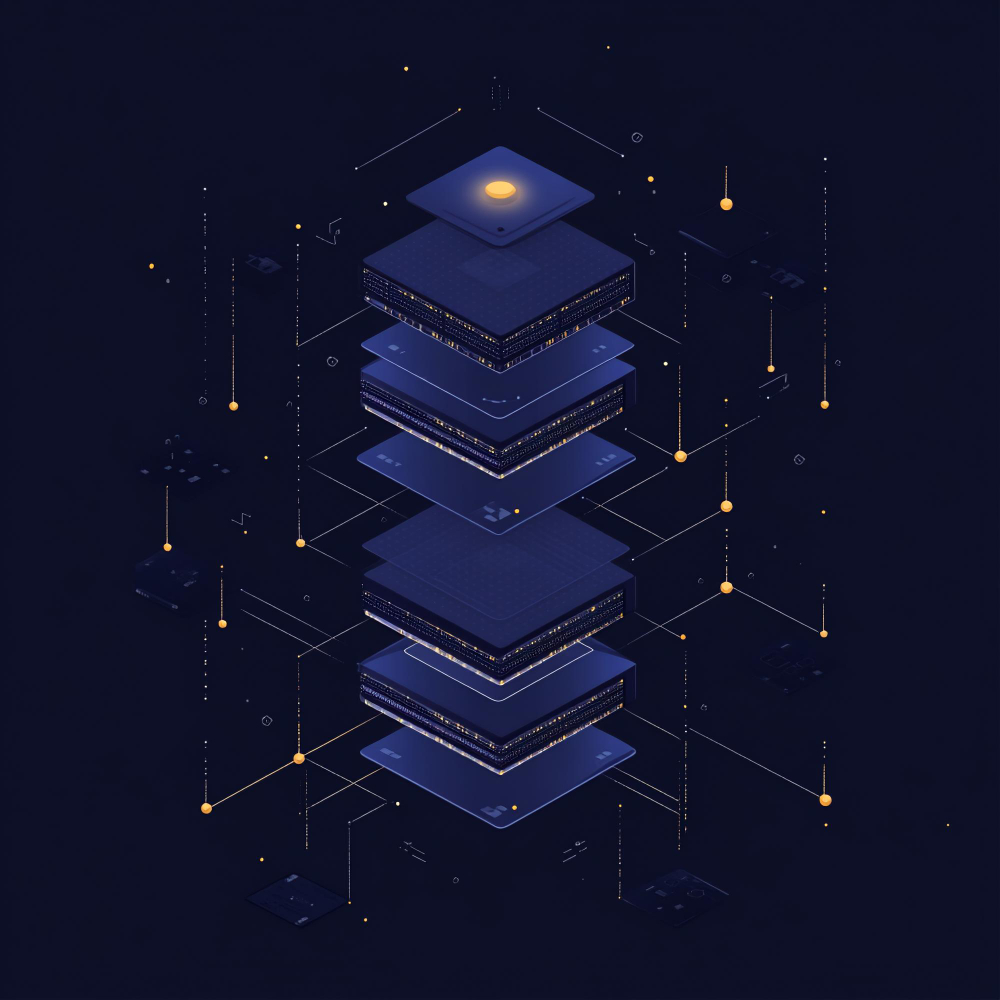
The cybersecurity architecture follows the NexGenTek Delivery System model. Each layer has defined controls, outputs, and connection points. Security decisions in one layer constrain and inform adjacent layers — the boundary between them is owned, not assumed.
Authentication & Authorization
Governs who can access what — across every system, application, and cloud environment — with zero-trust principles applied at the identity layer.
Network & Cloud Security
Governs network segmentation, cloud security posture, and infrastructure hardening — enforcing the Identity layer's access controls at the infrastructure boundary.
Code Security & Runtime Protection
Governs application security from development to production — integrating security testing into the delivery pipeline and protecting running applications in production.
Encryption & Data Governance
Governs data classification, encryption at rest and in transit, and data handling obligations — ensuring compliance with GDPR, HIPAA, and sector-specific requirements.
Detection & Incident Response
Governs threat detection, alert triage, and incident response across all four layers — with tested playbooks and a contractual P1 response SLA from go-live.
Security controls designed and implemented from engagement start. Compliance evidence generated continuously — not assembled before audits. P1 SLA operational from go-live.
Defined security posture at every milestone. Architecture signed off before implementation. Full security documentation and control ownership transferred at close.
ISO 27001, SOC 2, SIG Lite, and DPA available within 24 hours of NDA. Pre-completed vendor questionnaire. Most assessments close in one exchange.
Five capabilities. One delivery and governance standard.
Each capability operates under the NexGenTek Delivery System framework. ISO 27001, SOC 2, and ISO 9001 controls apply to all five. Scope and ownership terms are defined at engagement start.
Risk Assessment & Security Architecture
Controls the structured identification, quantification, and remediation of enterprise security risk — producing an actionable architecture, not a recommendations report.
Controls: risk identification and quantification against NIST CSF 2.0, security architecture design, and prioritized remediation roadmap with business impact mapping. Outputs: signed-off security architecture, risk register with quantified impact, and engagement scope with defined acceptance criteria.
- Risk quantification
- Security architecture
- Remediation roadmap
- All five security layers
- Infrastructure design
- Compliance obligations
- Signed architecture
- Risk register
- Engagement scope
Compliance & Governance
Controls compliance program delivery — SOC 2, ISO 27001, HIPAA, PCI DSS — generating continuous evidence rather than assembling it before audits.
Controls: gap remediation against the applicable framework, policy development and version control, control implementation and testing, and continuous evidence generation. Outputs: audit-ready compliance environment with continuous evidence, structured to support certification readiness and reduce audit preparation to days, not weeks.
- Gap remediation
- Policy governance
- Control testing
- Identity and access layer
- Infrastructure controls
- Monitoring pipeline
- Continuous evidence
- Audit-ready environment
- Policy documentation
Security Operations & Monitoring
Controls ongoing threat detection, alert triage, and security operations — with a P1 response SLA contractual from the first day of managed operation.
Controls: SIEM deployment and tuning with custom detection logic, 24/7 alert triage, threat hunting, and operational security metrics reporting. Outputs: operational security monitoring with contractual P1 SLA, monthly security posture reports, and continuous compliance evidence for all monitored systems.
- SIEM and detection
- Alert triage (24/7)
- Threat hunting
- All infrastructure layers
- Application runtime
- Compliance evidence
- P1 SLA <2hr active
- Monthly posture reports
- Continuous evidence
Identity & Access Management
Controls the enterprise identity fabric — zero-trust access across cloud, on-premises, and SaaS environments from a single governance model.
Controls: IdP deployment and configuration, MFA enforcement, RBAC model design, PAM implementation, and service account governance. Outputs: zero-trust identity model active across all environments, privileged access governed and audited, access review processes automated.
- Identity provider
- MFA and RBAC
- PAM governance
- Infrastructure access
- Application authentication
- Data access controls
- Zero-trust model active
- PAM implemented
- Access audit trail
Threat Detection & Incident Response
Controls the organization's ability to detect, contain, and recover from security incidents — with tested playbooks and a contractual P1 response SLA from the start of managed operation.
Controls: threat detection tuning, incident response playbook development and testing (tabletop and dry run), escalation procedures, forensic capability, and post-incident review. Outputs: tested IR playbooks, contractual P1 SLA operational from go-live, containment procedures validated before a real incident requires them, full IR documentation transferred at close.
- Detection tuning
- Playbook development
- Tabletop exercises
- Containment dry runs
- Escalation procedures
- Forensic capability
- P1 SLA <2hr operational
- Tested playbooks live
- Full IR docs transferred
How NexGenTek Compares to Traditional Cybersecurity Consulting
Most firms deliver assessments and recommendations. NexGenTek delivers secure operating systems.
Traditional cybersecurity consulting relies on audits, reports, and external recommendations. NexGenTek delivers similar capabilities through a structured system that integrates security architecture, execution, and ownership into a single model — reducing risk exposure, accelerating compliance, and lowering total cost without compromising enterprise standards.

How NexGenTek Compares to Traditional Cybersecurity Consulting
Most firms deliver assessments and recommendations. NexGenTek delivers secure operating systems.
Traditional cybersecurity consulting relies on audits, reports, and external recommendations. NexGenTek delivers similar capabilities through a structured system that integrates security architecture, execution, and ownership into a single model — reducing risk exposure, accelerating compliance, and lowering total cost without compromising enterprise standards.
Security delivery structured for execution, control, and auditability.
Delivery models are extensions of the system, not separate offerings.
NexGenTek provides consulting expertise, execution teams, and augmentation within a single delivery model, eliminating the need for multiple vendors.
NexGenTek supports three engagement models for cybersecurity and risk. All three operate within the same governance framework, quality controls, and accountability structure. The system does not change. The scale does.

Full Security Program Delivery
End-to-end security program — risk assessment, architecture, implementation, compliance, and ongoing operations managed by NexGenTek under defined SLAs with full documentation transfer at close.
Ongoing Security Operations
Managed security operations embedded within client environment — NexGenTek operates SIEM, manages alerts, and maintains compliance evidence under a contractual SLA model.
Dedicated Security Teams
Specialist security engineers, compliance practitioners, and incident responders embedded within client operations — governed within the NexGenTek delivery framework.
Measured results — not projected
Outcomes are measured by operational security posture, not audit reports.
Prior program ran 18 months without reaching certification. 34 open findings, no continuous evidence collection, and no version-controlled policies. NexGenTek implemented gap remediation, SIEM deployment, and continuous evidence collection in one structured program. Certification-ready at week 14. Subsequent audit preparation reduced to 3 days — evidence available on demand, not assembled before each cycle.
Clinical operations across 8 facilities with HIPAA obligations and an ISO 27001 program that had never been independently audited. NexGenTek implemented the full ISO 27001 control set with continuous evidence generation. HIPAA Security Rule controls documented and evidenced from first deployment. No deficiencies in subsequent OCR review. Audit preparation now takes 3 business days across all facilities.
Organization had no documented incident response playbooks, no SIEM, and no defined escalation procedures. A ransomware event had taken 11 days to contain the previous year. NexGenTek deployed SIEM with custom detection rules, developed and tested IR playbooks across three tabletop exercises, and established 24/7 alert monitoring with a contractual P1 SLA. Subsequent event contained within 90 minutes — under SLA.
Built for enterprise procurement from day one.
Cybersecurity vendor procurement is the most scrutinized vendor risk assessment organizations conduct. NexGenTek is structured to meet every documentation requirement before any commercial commitment — not after a six-week exchange of questionnaires.
Compliance Package
Eight documents covering the complete vendor security review — delivered within 24 hours of NDA execution. No separate requests. No commercial agreement required before delivery.
Speak with our teamNDA within 2 hours · Package within 24h · No commitment required
- ISO 27001:2022 certificate + scope
- SOC 2 Type II full report (NDA)
- ISO 9001:2015 certificate
- Standard DPA (GDPR)
- Pre-completed SIG Lite questionnaire
- Penetration test executive summary
- BCP/DR plan executive summary
- SLA framework with service credit terms
Secure systems,
not isolated controls.
Build environments that are protected, governed, and operational by design. Security architecture, implementation, compliance, and ongoing operations — delivered as a single controlled system with defined outcomes and full documentation transfer at close.